


 Send Inquiry
Compound Pendulum
Price 1350 INR/ Piece
MOQ : 1 , , Piece
Compound Pendulum Specification
- Frequency
- Manual operation (not electrical)
- Core Components
- Fixed base, graduated scale, adjustable knife edges, pendulum arm
- Power Source
- Not required (mechanical device)
- Temperature Range
- Ambient (20-30°C)
- Feature
- Adjustable suspension points, precision graduated scale
- Accuracy
- High, suitable for academic measurement
- Measurement Range
- 0-600 mm (effective pendulum length)
- Model No
- CP-PEND-2024L
- Automation Grade
- Manual
- Capacity
- Supports various pendulum bodies
- Equipment Materials
- Heavy steel base, stainless steel rod, aluminum pendulum arm
- Type
- Physics laboratory apparatus
- Usage
- Measurement and demonstration of compound pendulum principles in educational laboratories
- Display Type
- Analog scale
- Dimension (L*W*H)
- Base: approx. 450 mm x 120 mm; Height: up to 750 mm
- Weight
- Approx. 8-10 Kg
- Suspension Knife Edges
- Hardened steel, low friction
- Mounting Type
- Bench top fixed base
- Scale Graduation
- Clearly marked in millimeters
- Pendulum Arm Material
- Aluminum
- Finish
- Powder coated base with anodized metal parts
- Accessories Included
- Instruction manual, spare knife edges
- Pendulum Rod Length
- Up to 700 mm
- Application
- Physics experiment in educational institutions and research
Compound Pendulum Trade Information
- Minimum Order Quantity
- 1 , , Piece
- Main Export Market(s)
- Australia, North America, Eastern Europe, Middle East, Western Europe, Africa, Central America, South America, Asia
Compound Pendulum About
Compound Pendulum
This Pendulum Is Used To Investigate The Relationship Between The Period Of Oscillation Of A Rigid Bar Pendulum And The Distance Of Its Suspension Point From Its Center Of Mass. A Removable Steel Knife Edge, A Wall Bracket Is Provided For Suspension.
Precision in Physics Experiments
The compound pendulum apparatus is engineered for accuracy, supporting effective length measurements up to 600 mm. Each component, from the hardened steel knife edges to the analog scale, is optimized for reliable data collection. The adjustable suspension points allow students and researchers to explore dynamic pendulum behaviors with minimal friction interference.
Durable Construction and Ergonomic Design
Built on a heavy steel base and featuring an aluminum pendulum arm, the equipment delivers stability and longevity for repeated laboratory use. Its powder-coated finish and anodized metal parts resist corrosion, making it well suited to withstand routine handling and ambient temperature ranges common in laboratories.
Comprehensive Accessories and Flexible Use
Every unit includes spare knife edges and a detailed instruction manual. The apparatus is bench-top mounted for secure operation and supports various pendulum bodies, enabling a wide array of experiment setups. This flexibility ensures usability across secondary, post-secondary, and research environments.
FAQs of Compound Pendulum:
Q: How is the pendulum length measured using this apparatus?
A: The pendulum length is measured using the precision analog scale, which is clearly graduated in millimeters along the base. Adjustments to the suspension points allow users to set and read effective pendulum lengths ranging from 0 to 600 mm.Q: What are the key features that enhance experimental accuracy?
A: Key features include hardened steel knife edges for low friction, a graduated scale with clear markings, adjustable suspension points, and a robust fixed base. These components collectively reduce measurement errors commonly encountered in pendulum experiments.Q: When is this apparatus typically used in an educational context?
A: This compound pendulum model is frequently used during physics laboratory sessions in schools, colleges, and universities. It aids students in understanding the principles of pendulum motion, oscillations, and experimental data analysis.Q: Where should the device be installed for optimal performance?
A: For best results, place the compound pendulum apparatus on a stable, bench-top surface in a laboratory environment within the recommended ambient temperature range of 20-30C. The fixed base mounting ensures secure and repeatable measurements.Q: What is the process for adjusting the pendulum parameters during experiments?
A: Users can adjust the pendulums length by moving the suspension knife edges to the desired positions along the scale. The pendulum arm can accommodate swings at various lengths, and the analog scale makes readings precise and convenient.Q: How does this equipment benefit academic and research users?
A: It provides high accuracy and repeatability for fundamental studies and demonstrations of pendulum physics. The inclusion of comprehensive accessories and robust construction enhances both ease of use and durability, making it suitable for ongoing educational and research needs.Q: What accessories are included, and how do they support usage?
A: Each apparatus comes with an instruction manual for guidance and spare knife edges for easy replacement, ensuring that experiments can continue without interruption due to wear or damage to core components.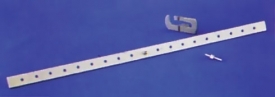
Tell us about your requirement

Price:
Quantity
Select Unit
- 50
- 100
- 200
- 250
- 500
- 1000+
Additional detail
Mobile number
Email

More Products in Physics Lab Instruments Category
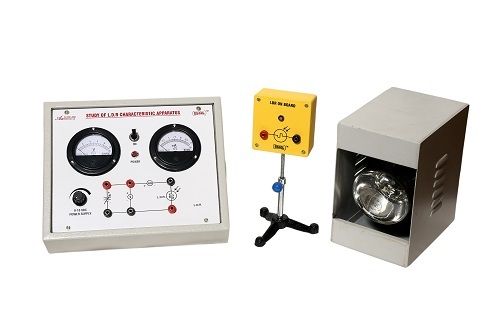
LDR CHARACTERISTICS APPARATUS
Price 3450 INR / Piece
Minimum Order Quantity : 1 Piece
Frequency : 50 Hz
Equipment Materials : Powder Coated MS Enclosure, HighGrade PCB, Standard Wiring
Weight : Approx. 2 to 3 kg
Voltage : 12V/220V (Regulated Internal Supply)
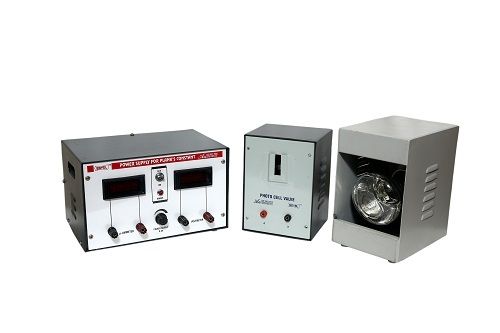
PLANKS CONSTANT APPARATUS
Price 18500 INR / Piece
Minimum Order Quantity : 1 Piece
Frequency : 50 Hz
Equipment Materials : Highgrade metallic body, durable optical components
Weight : Approx. 2.5 kg
Voltage : 220 V
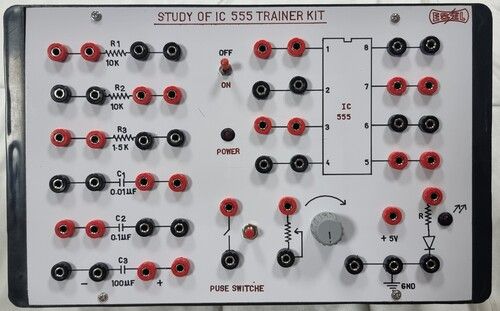
STUDY OF IC-555
Price 5600 INR / Piece
Minimum Order Quantity : 1 Piece
Frequency : Up to 500 kHz
Equipment Materials : Highgrade PCB, acrylic panel, robust enclosure
Weight : Approx. 2 Kg
Voltage : 9V DC / 230V AC (operable)
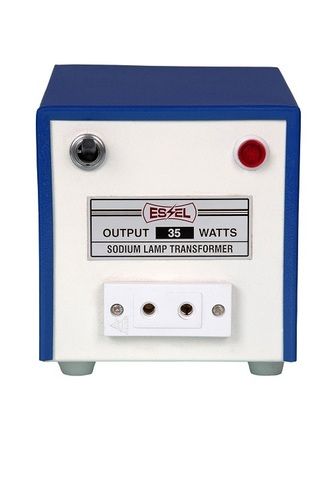
SODIUM VAPOUR LAMP TRANSFORMERS
Price 2150 INR / Piece
Minimum Order Quantity : 1 Piece
Frequency : 50 Hz
Equipment Materials : Laminated CRGO Steel Core, Highgrade Copper Winding
Weight : Approx. 3.5 kg (varies with model ratings)
Voltage : Input: 220V AC, Output: up to 240V/250V as required

Contact Details
ESEL INTERNATIONAL
GST : 06AAFFE3644R1Z0
GST : 06AAFFE3644R1Z0
Contact Details
- 62, Azad Nagar, RamPur Chowk, P.O Industrial Area, Ambala Cantt - 133001, Haryana, India
- Phone :08045478451
- Send Inquiry
 Send Inquiry
Key personnel
- Mr. Sumit (M.D.)
- Mobile :08045478451

 |
ESEL INTERNATIONAL
All Rights Reserved.(Terms of Use) Developed and Managed by Infocom Network Private Limited. |
