


 Send Inquiry
Joules Calorimeter
Price 800 INR/ Piece
MOQ : 1 Piece
Joules Calorimeter Specification
- Equipment Materials
- Wood
- Usage
- For Laboratory
- Capacity
- 1 Kg/hr
- Temperature Range
- 10-40 0C Celsius (oC)
- Dimension (L*W*H)
- 12*6*6 Centimeter (cm)
- Weight
- 1000 Kilograms (kg)
Joules Calorimeter Trade Information
- Minimum Order Quantity
- 1 Piece
- FOB Port
- Ambala cantt
- Payment Terms
- Cash in Advance (CID)
- Supply Ability
- 1 Piece Per Week
- Delivery Time
- 1 Days
- Sample Policy
- Sample costs shipping and taxes has to be paid by the buyer
- Packaging Details
- Each Piece
- Main Export Market(s)
- Africa, Asia
- Main Domestic Market
- All India
- Certifications
- ISO 9001..2015/CE
Joules Calorimeter About
We hold expertise in this field, offering to our valuable clients a premium range of Joules Calorimeter. This calorimeter is procured from some reputed vendors of the industry, thus highly demanded in different industries.
High-Quality Materials and Construction
Our Joules Calorimeter is expertly constructed using wood, enhancing both insulation and stability during experiments. The compact size ensures ease of handling, while the sturdy build supports repeated laboratory usage. This device is perfectly suited for scientific environments that require durable and accurate measurement tools.
Versatile Laboratory Applications
Engineered for laboratory use, the Joules Calorimeter is tailored to measure thermal energy and heat transfer efficiently. Its broad temperature range of 10-40C accommodates diverse experimental requirements, making it suitable for educational settings, research labs, and industrial quality checks.
FAQs of Joules Calorimeter:
Q: How do you operate the Joules Calorimeter in a laboratory setting?
A: To use the Joules Calorimeter, set up the device on a flat surface, insert the samples, and connect appropriate sensors for temperature measurement. Ensure all readings are taken within the 10-40C temperature range for optimal accuracy.Q: What materials are used in the construction of the Joules Calorimeter?
A: The calorimeter is primarily made from wood, which acts as an insulator, ensuring minimal heat loss during experiments and providing structural stability.Q: When is the best time to use this calorimeter for laboratory measurements?
A: It is best utilized during laboratory sessions that require precise measurement of heat transfer or energy changes within a controlled temperature range of 10-40C.Q: Where is the Joules Calorimeter manufactured and supplied from?
A: Our calorimeter is manufactured, supplied, and exported from India, adhering to international standards for laboratory instruments.Q: What is the process for measuring heat using this calorimeter?
A: The process involves placing a known mass of substance inside the calorimeter, initiating a reaction or thermal change, and recording temperature variations to calculate heat transfer using established thermodynamic formulas.Q: How does the calorimeter benefit laboratory research?
A: This instrument provides accurate and repeatable measurements, helping researchers and students deepen their understanding of thermodynamics and energy conversion processes in a controlled, reliable manner.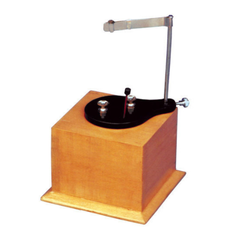
Tell us about your requirement

Price:
Quantity
Select Unit
- 50
- 100
- 200
- 250
- 500
- 1000+
Additional detail
Mobile number
Email

More Products in Physics Lab Instruments Category
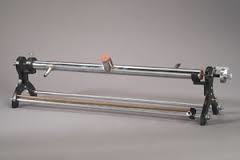
Liner Expansion Apparatus
Price 4450 INR / Piece
Minimum Order Quantity : 1 Piece
Weight : Approx. 1215 kg
Usage : Determining coefficient of linear expansion of metals and rods
Equipment Materials : Heavy gauge mild steel frame, brass/steel expansion rods, borosilicate glass
Dimension (L*W*H) : 450 x 180 x 200 mm
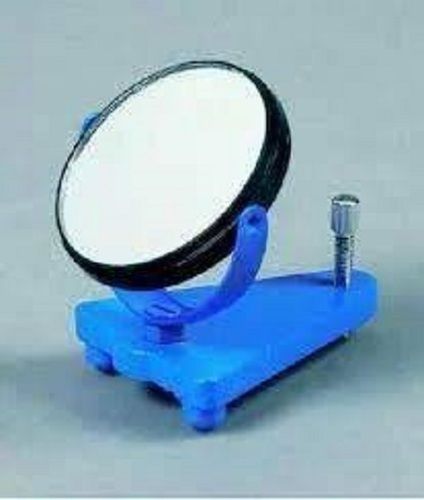
OPTIVAL LEVER
Price 850.00 INR / Piece
Minimum Order Quantity : 1 Piece
Weight : 500 Grams (g)
Usage : IN LABORATORY
Equipment Materials : Iron & Bakelite
Dimension (L*W*H) : 7*5*3 Inch (in)
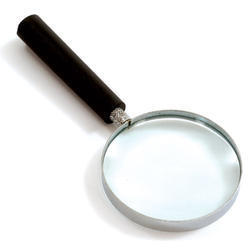
Hand Magnifier
Price 250 INR / Piece
Minimum Order Quantity : 1 Piece
Weight : 400 Kilograms (kg)
Usage : For Laboratory
Equipment Materials : Glass
Dimension (L*W*H) : 8*6*2 Centimeter (cm)
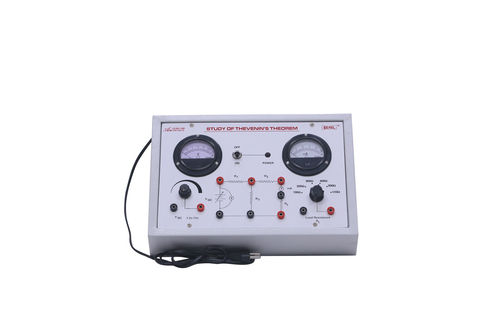
Thevenin's Theorem
Price 5500 INR / Piece
Minimum Order Quantity : 1 Piece
Weight : 2100 Kilograms (kg)
Usage : For Laboratory
Equipment Materials : Iron & Bakelite
Dimension (L*W*H) : 12*10*4 Centimeter (cm)

Contact Details
ESEL INTERNATIONAL
GST : 06AAFFE3644R1Z0
GST : 06AAFFE3644R1Z0
Contact Details
- 62, Azad Nagar, RamPur Chowk, P.O Industrial Area, Ambala Cantt - 133001, Haryana, India
- Phone :08045478451
- Send Inquiry
 Send Inquiry
Key personnel
- Mr. Sumit (M.D.)
- Mobile :08045478451

 |
ESEL INTERNATIONAL
All Rights Reserved.(Terms of Use) Developed and Managed by Infocom Network Private Limited. |
