


 Send Inquiry
Analog Ammeter
Price 300 INR/ Piece
MOQ : 6 Pieces
Analog Ammeter Specification
- Equipment Materials
- Iron & Bakelite
- Usage
- For Laboratory
- Capacity
- 1 Kg/hr
- Temperature Range
- 10-40 0C Celsius (oC)
- Display Type
- Analog
- Dimension (L*W*H)
- 7*3.75*3.25 Centimeter (cm)
- Weight
- 150 Kilograms (kg)
Analog Ammeter Trade Information
- Minimum Order Quantity
- 6 Pieces
- FOB Port
- Ambala cantt
- Payment Terms
- Cash in Advance (CID)
- Supply Ability
- 1 Piece Per Week
- Delivery Time
- 1 Days
- Sample Policy
- Sample costs shipping and taxes has to be paid by the buyer
- Packaging Details
- Each Piece
- Main Export Market(s)
- Africa, Asia
- Main Domestic Market
- All India
- Certifications
- ISO 9001..2015/CE
Analog Ammeter About
With significant business growth, we are engaged as manufacturer, supplier and exporter of Ammeter in Ambala Cantt, Haryana, India available with following details.
Specifications:
Specifications:
- DC moving coil panel meter
- Different models are available like M0 65, MR 80 AND MR 100.
Durable Construction
Made from iron and bakelite, this ammeter boasts a sturdy build that can withstand frequent laboratory use. These materials not only enhance product longevity but also safeguard its internal components, ensuring consistent operation over time.
Precision and Reliability
This analog ammeter provides accurate electrical current readings, essential for laboratory settings where precise measurements are crucial. The clear analog display enables easy and quick assessment for researchers, educators, and engineers.
Versatile Laboratory Application
With its compact size and operational temperature range of 1040C, the ammeter fits seamlessly into diverse laboratory environments. Its manageable weight and steady build make it suitable for routine testing and educational purposes.
FAQs of Ammeter:
Q: How is the analog ammeter used in laboratory settings?
A: The analog ammeter is utilized in laboratory environments to measure electrical current in experimental setups, allowing users to monitor and regulate current flow with precision.Q: What are the benefits of choosing this analog ammeter over digital alternatives?
A: This ammeter offers reliability, durability, and simple operation, especially useful for quick visual assessments and ensuring consistent readings in laboratory settings without reliance on batteries or software.Q: When is the ideal time to use this ammeter during experiments?
A: It is advisable to use the ammeter when continuous or real-time current measurements are needed, such as during calibration, circuit testing, or controlled experiments within its temperature range of 1040C.Q: Where is this ammeter manufactured and exported from?
A: This analog ammeter is manufactured in India and is supplied and exported worldwide, ensuring accessibility for laboratories internationally.Q: What is the process for installing the analog ammeter in a laboratory?
A: Installation typically involves securely mounting the device in the desired location, connecting it to the electrical circuit as per instructions, and calibrating it for accurate readouts before beginning measurements.Q: What is the operational capacity of the ammeter and its implications for laboratory use?
A: The ammeter has a capacity of 1 kg/hr, indicating its ability to handle measurements and usage efficiently within specified limits, suitable for routine laboratory applications.Q: What advantages does the iron and bakelite construction provide?
A: Iron adds strength and stability, while bakelite offers insulation and resistance to heat, ensuring the ammeter remains safe, durable, and effective during laboratory operations.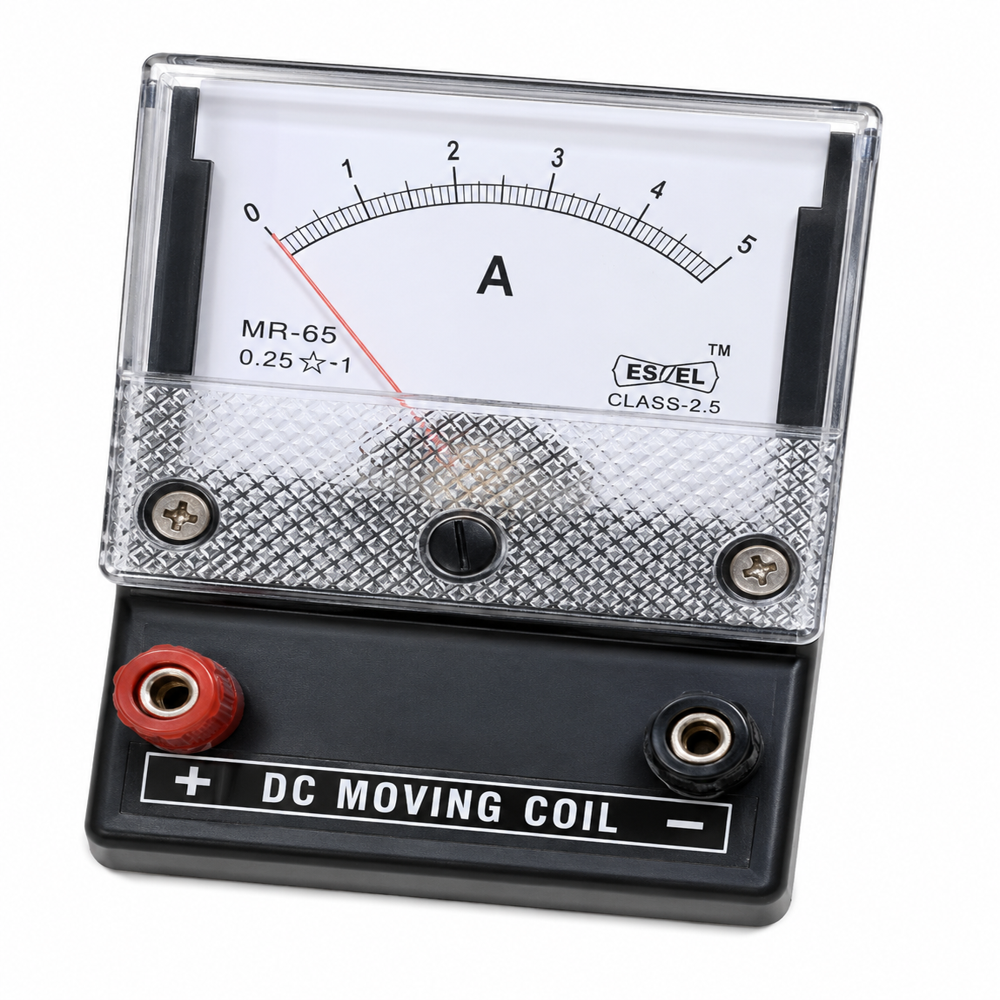
Tell us about your requirement

Price:
Quantity
Select Unit
- 50
- 100
- 200
- 250
- 500
- 1000+
Additional detail
Mobile number
Email

More Products in Physics Lab Instruments Category
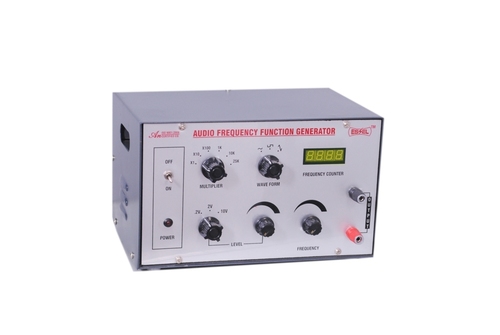
Audio Frequency Function Generator
Price 7000 INR / Piece
Minimum Order Quantity : 100 Pieces
Display Type : Digital
Temperature Range : 1040 0C Celsius (oC)
Equipment Materials : Iron & Bakelite
Capacity : 1 Kg/hr
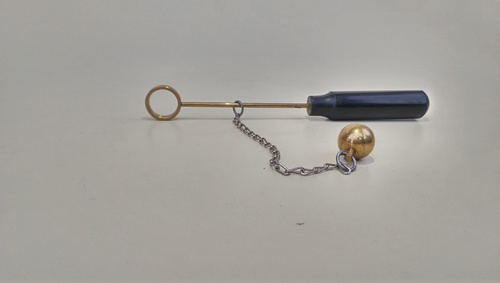
Ring And Ball Apparatus
Price 650 INR / Piece
Minimum Order Quantity : 2 Pieces
Display Type : Analog dial with pointer
Temperature Range : 30C to 110C
Equipment Materials : Copper/brass rings, steel balls, heat resistant test beaker, Bakelite/Fiber frame
Capacity : 2 samples per test (standard)
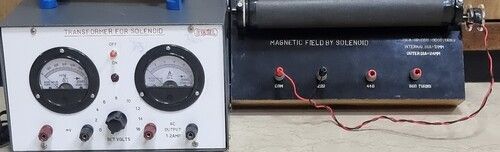
TO STUDY MAGNETIC FIELD OF SOLENOID
Price 11500 INR / Piece
Minimum Order Quantity : 1 Piece
Display Type : Analog
Temperature Range : Ambient to 50C
Equipment Materials : Solenoid coil, base stand, connecting wires, iron core
Capacity : Single unit
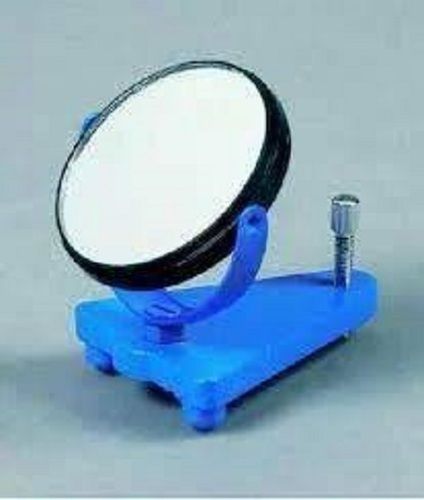
OPTIVAL LEVER
Price 850.00 INR / Piece
Minimum Order Quantity : 1 Piece
Display Type : Analog
Temperature Range : 1040 0C Celsius (oC)
Equipment Materials : Iron & Bakelite
Capacity : 1 Kg/hr

Contact Details
ESEL INTERNATIONAL
GST : 06AAFFE3644R1Z0
GST : 06AAFFE3644R1Z0
Contact Details
- 62, Azad Nagar, RamPur Chowk, P.O Industrial Area, Ambala Cantt - 133001, Haryana, India
- Phone :08045478451
- Send Inquiry
 Send Inquiry
Key personnel
- Mr. Sumit (M.D.)
- Mobile :08045478451

 |
ESEL INTERNATIONAL
All Rights Reserved.(Terms of Use) Developed and Managed by Infocom Network Private Limited. |
