


 Send Inquiry
Thevenin's Theorem
Price 5500 INR/ Piece
MOQ : 1 Piece
Thevenin's Theorem Specification
- Equipment Materials
- Iron & Bakelite
- Usage
- For Laboratory
- Capacity
- 1 Kg/hr
- Temperature Range
- 10-40 0C Celsius (oC)
- Display Type
- Analog
- Dimension (L*W*H)
- 12*10*4 Centimeter (cm)
- Weight
- 2100 Kilograms (kg)
Thevenin's Theorem Trade Information
- Minimum Order Quantity
- 1 Piece
- FOB Port
- ambala cantt
- Payment Terms
- Cash in Advance (CID)
- Supply Ability
- 1 Piece Per Week
- Delivery Time
- 1 Days
- Sample Policy
- Sample costs shipping and taxes has to be paid by the buyer
- Main Export Market(s)
- Africa, Asia
- Main Domestic Market
- All India
Thevenin's Theorem About
Thevenin's Theorem
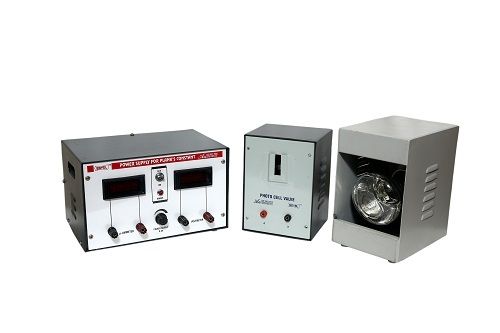
Board consists of regulated power Supply, Two moving coil meters, circuit diagram printed on the front pannel & connections of supplies ,meters & Resistances brought out at 4mm sockets.
Board consists of regulated power Supply, Two moving coil meters, circuit diagram printed on the front pannel & connections of supplies ,meters & Resistances brought out at 4mm sockets.
Precision Laboratory Equipment
Engineered for laboratory applications, this Thevenins Theorem apparatus guarantees reliable and precise experimental results. Its use of iron and Bakelite supports longevity and steadiness, while the analog display ensures clear, immediate readings. This combination of materials and features caters to academic and professional environments alike.
Temperature Range Versatility
The apparatus functions optimally between 10C and 40C, making it suitable for a wide range of laboratory environments across different climatic conditions. Its stable performance within this thermal window ensures the accuracy and consistency of your experimental outcomes.
FAQs of Thevenins Theorem:
Q: How is Thevenins Theorem apparatus used in the laboratory?
A: This equipment aids students and researchers in experimentally verifying Thevenins Theorem by allowing them to configure electrical circuits and measure corresponding voltages and currents using the analog display.Q: What are the main materials used in constructing this apparatus?
A: The apparatus is primarily constructed from durable iron, ensuring structural strength, and Bakelite, which provides excellent electrical insulation and resistance to heat.Q: When should you use this Thevenins Theorem apparatus?
A: It is best used during practical laboratory sessions for physics and electrical engineering courses to demonstrate or verify Thevenins Theorem principles with hands-on experiments.Q: Where can this apparatus be sourced from?
A: It is available for purchase from exporters, manufacturers, and suppliers in India, who cater to domestic and international laboratory equipment requirements.Q: What is the process for setting up the equipment for use?
A: Place the apparatus on a stable laboratory bench, connect the necessary circuit elements as per the experiment manual, and monitor readings on the analog display. Ensure operation remains within the specified temperature range.Q: What benefits does this apparatus provide in an educational setting?
A: It offers a clear, tactile method for learning circuit analysis, enhances experiment reliability, and with its sturdy build, stands up to repetitive use in busy labs.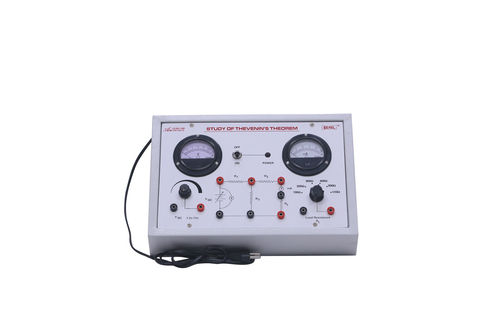
Tell us about your requirement

Price:
Quantity
Select Unit
- 50
- 100
- 200
- 250
- 500
- 1000+
Additional detail
Mobile number
Email

More Products in Physics Lab Instruments Category
Electrical Vibrator
Price 1400 INR / Piece
Minimum Order Quantity : 1 Piece
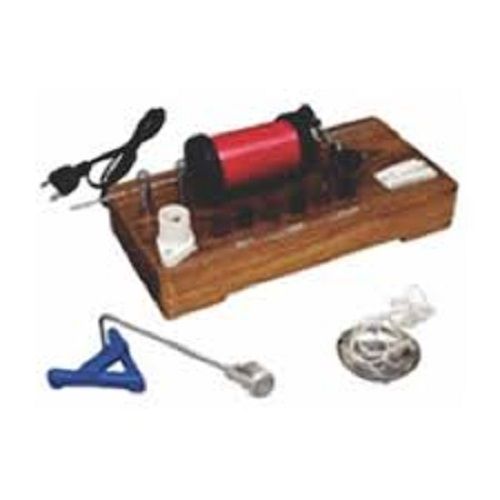
Usage : Construction, Concrete Compaction
Dimension (L*W*H) : 400 mm x 220 mm x 220 mm
Equipment Materials : Cast Iron / Mild Steel
Weight : 28 kg
Hooks Law Apparatus
Price 1300 INR / Piece
Minimum Order Quantity : 10 Pieces
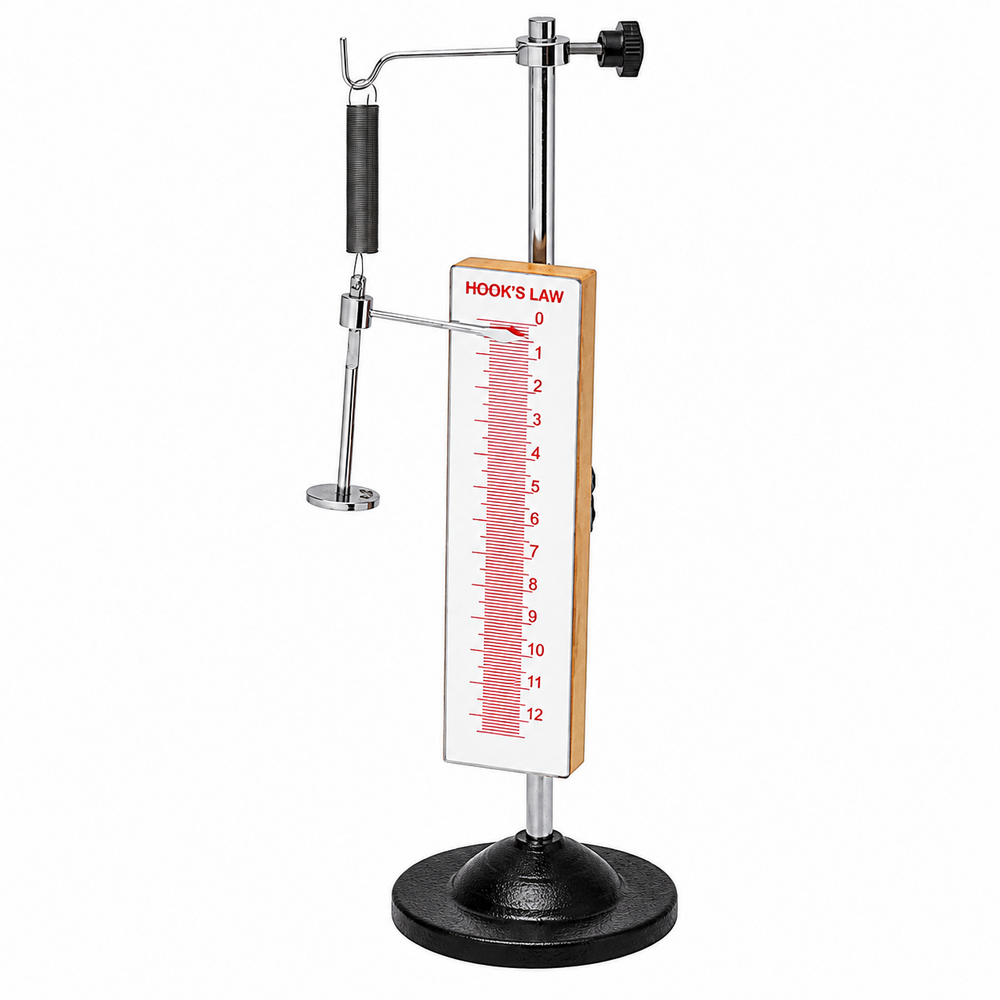
Usage : Physics lab experiments
Dimension (L*W*H) : Approximately 20cm x 10cm x 50cm
Equipment Materials : Metal Plastic
Weight : Approximately 1.5kg
MOSFET CHARACTERISTICS APPARATUS
Price 3950 INR / Piece
Minimum Order Quantity : 1 Piece
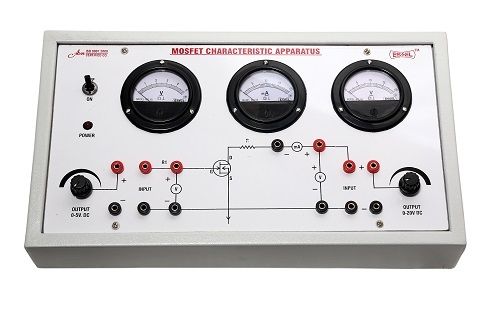
Usage : For studying and plotting MOSFET characteristics (output and transfer characteristics)
Dimension (L*W*H) : Approx. 320mm x 220mm x 110mm
Equipment Materials : Powder coated metal housing with FR4 PCB and highquality sockets
Weight : Approx. 23 kg
PLANKS CONSTANT APPARATUS
Price 18500 INR / Piece
Minimum Order Quantity : 1 Piece
Usage : Measurement and determination of Plancks constant
Dimension (L*W*H) : 250 mm x 180 mm x 90 mm
Equipment Materials : Highgrade metallic body, durable optical components
Weight : Approx. 2.5 kg

Contact Details
ESEL INTERNATIONAL
GST : 06AAFFE3644R1Z0
GST : 06AAFFE3644R1Z0
Contact Details
- 62, Azad Nagar, RamPur Chowk, P.O Industrial Area, Ambala Cantt - 133001, Haryana, India
- Phone :08045478451
- Send Inquiry
 Send Inquiry
Key personnel
- Mr. Sumit (M.D.)
- Mobile :08045478451

 |
ESEL INTERNATIONAL
All Rights Reserved.(Terms of Use) Developed and Managed by Infocom Network Private Limited. |
