


 Send Inquiry
Youngs Modulus Apparatus
Price 2250 INR/ Piece
MOQ : 1 , , Piece
Youngs Modulus Apparatus Specification
- Automation Grade
- Manual
- Measurement Range
- 0-30 mm scale extension
- Core Components
- Frame, scale, micrometer screw, weights, wire holders
- Model No
- YM-01 or as per supplier
- Accuracy
- Up to 0.01 mm (micrometer graduations)
- Capacity
- Up to 5 kg load (depends on model)
- Temperature Range
- Ambient
- Feature
- Fine reading micrometer, stable base, adjustable scale
- Power Source
- Not required (manual)
- Frequency
- Manual operation (no frequency)
- Equipment Materials
- Stainless steel, brass, aluminum, and cast iron components
- Type
- Youngs Modulus Measurement Apparatus
- Usage
- For laboratory experiments to determine Youngs Modulus of wires
- Display Type
- Analog scale with pointer and vernier
- Dimension (L*W*H)
- Approx. 60 x 18 x 18 cm
- Weight
- Approx. 5-8 kg (varies by model)
- Customization Options
- Available as per customer request
- Micrometer Range
- 0-25 mm
- Distance Scale
- Graduated in millimeters for accurate readings
- Suspension System
- Precision pulleys reduce friction loss
- Wire Compatibility
- Suitable for steel, brass, and copper wires
- Base Construction
- Heavy cast iron base offers high stability
- Maximum Extension
- Up to 30 mm depending on wire and weights
- Application Field
- Suitable for educational institutes and research laboratories
- Packing
- Supplied in export-quality packaging for safe transport
- Finish
- Corrosion-resistant powder coating
- Compliance
- Meets standard laboratory requirements for physical measurement apparatus
Youngs Modulus Apparatus Trade Information
- Minimum Order Quantity
- 1 , , Piece
- Main Export Market(s)
- Western Europe, Africa, Central America, Eastern Europe, Middle East, South America, Asia, North America, Australia
Youngs Modulus Apparatus About
Youngs Modulus Apparatus
Consists Of A Brass Scale 10 Cm Long And A Vernier Reading To 0.1 Mm With V Side Clamp, Guides For Wire, Ceiling Attachment, 5 Meter Of Wire And A Rectangular Tension Weight.
Reliable Measurements for Lab Experiments
This Youngs Modulus Apparatus is crafted to meet the demands of both educational institutes and research facilities. It enables clear, analog scale readings and supports wires made from steel, brass, and copper, helping students and researchers obtain reproducible results with minimal error. Its corrosion-resistant finish and robust construction enhance longevity and consistent performance across a range of ambient conditions.
Enhanced Stability and Accuracy
The apparatus features a heavy cast iron base for stability and precision pulleys to reduce friction loss during experimentation. Accurate extension measurements are possible due to a finely graduated millimeter scale and micrometer screw, allowing detection of minute changes in wire length, which is vital for Youngs modulus calculations.
FAQs of Youngs Modulus Apparatus:
Q: How is the Youngs Modulus Apparatus used in laboratory experiments?
A: In laboratory settings, the apparatus is employed by suspending a wire, attaching calibrated weights up to 5 kg, and measuring its extension using the micrometer and analog scale. This process lets users determine the Youngs modulus by calculating the wires elastic response under load.Q: What types of wires are compatible with this apparatus?
A: The Youngs Modulus Apparatus is suitable for steel, brass, and copper wires, allowing flexibility in experimentation and adherence to standard physical measurement protocols.Q: What benefits does the heavy cast iron base provide?
A: The heavy cast iron base ensures the apparatus remains stable during use, reducing mechanical vibrations and inaccuracies, thus offering reliable and repeatable measurement results.Q: Where can this apparatus be deployed effectively?
A: It is ideal for educational institutes, university laboratories, and research facilities where physical property characterization and Youngs modulus measurements are required.Q: What is the process for measuring extension with this apparatus?
A: To measure extension, the wire is loaded gradually with weights, and changes in its length are read from the millimeter scale and micrometer, which measures extensions as small as 0.01 mm.Q: When is customization available for this apparatus?
A: Customization is available upon customer request, allowing adjustments in specifications, wire holders, or other features to suit specific laboratory requirements or applications.Q: What are the main advantages of manual operation with this apparatus?
A: Manual operation provides direct control over the experiment, increases reliability since power sources are not needed, and suits environments where accessibility and simplicity are preferred.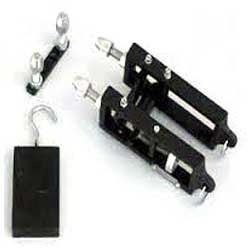
Tell us about your requirement

Price:
Quantity
Select Unit
- 50
- 100
- 200
- 250
- 500
- 1000+
Additional detail
Mobile number
Email

More Products in Physics Lab Instruments Category
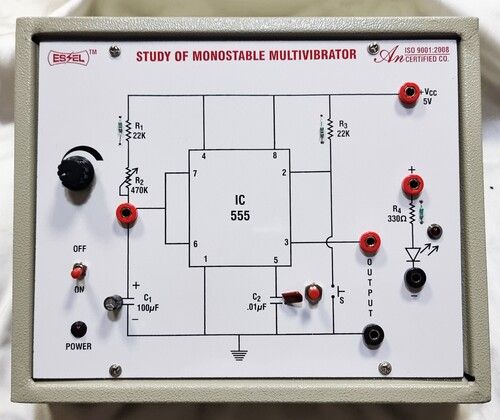
MONOSTABLE MULTIVIBRATOR USING IC 555
Price 2900 INR / Piece
Minimum Order Quantity : 1 Piece
Weight : ~30 grams
Capacity : Single pulse output per trigger
Dimension (L*W*H) : Approx. 85mm x 55mm x 15mm
Equipment Materials : FR4 PCB, electronic grade resistors and capacitors, IC 555 timer, LED, tactile switch, connector pins
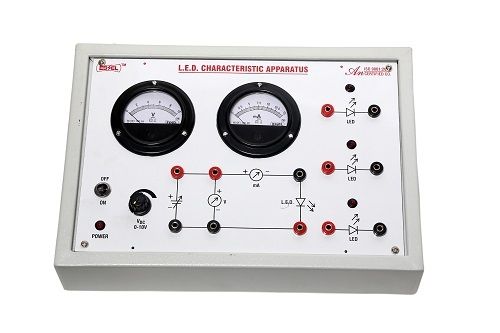
L.E.D CHARACTERISTICS APPARATUS
Price 3450 INR / Piece
Minimum Order Quantity : 1 Piece
Weight : Approximately 2.5 kg
Capacity : Single LED module (standard lab use)
Dimension (L*W*H) : 260 mm x 170 mm x 110 mm
Equipment Materials : Highgrade Bakelite, ABS enclosure, brass terminals, printed circuit board
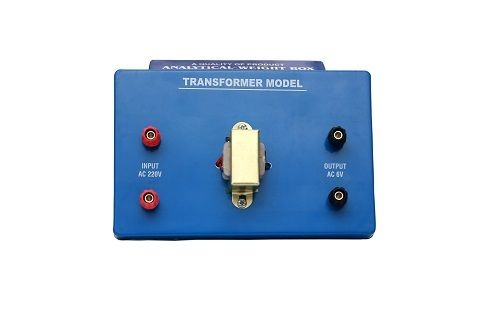
MODEL TRANSFORMERS
Price 290 INR / Piece
Minimum Order Quantity : 1 Piece
Weight : Approx. 1.5 kg
Capacity : 2.5 Ampere
Dimension (L*W*H) : 20x15x12 cm
Equipment Materials : Wooden Base on Bakelite Panel
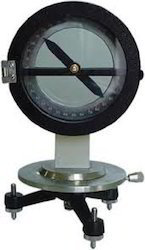
Dip Circle
Price 8000 INR / Piece
Minimum Order Quantity : 10 Pieces
Weight : 1200 Kilograms (kg)
Capacity : 1 Kg/hr
Dimension (L*W*H) : 10*64 Centimeter (cm)
Equipment Materials : Iron & Bakelite

Contact Details
ESEL INTERNATIONAL
GST : 06AAFFE3644R1Z0
GST : 06AAFFE3644R1Z0
Contact Details
- 62, Azad Nagar, RamPur Chowk, P.O Industrial Area, Ambala Cantt - 133001, Haryana, India
- Phone :08045478451
- Send Inquiry
 Send Inquiry
Key personnel
- Mr. Sumit (M.D.)
- Mobile :08045478451

 |
ESEL INTERNATIONAL
All Rights Reserved.(Terms of Use) Developed and Managed by Infocom Network Private Limited. |
